The stakes of an optimized listing in 2026
A real estate listing is not just about price. It's about clarity, trust, and the ability to help prospects visualize themselves in the space. In 2026, your prospects compare dozens of properties in minutes, often on mobile, and only retain what they can quickly understand and visualize.
The goal of a "10-minute optimization" is not to redo your entire marketing strategy, but to remove friction points that lower click-through rates, contact rates, and visit quality. Good news: these are often very quick details to fix, especially if you leverage visual creation tools.
What you can improve in 10 minutes
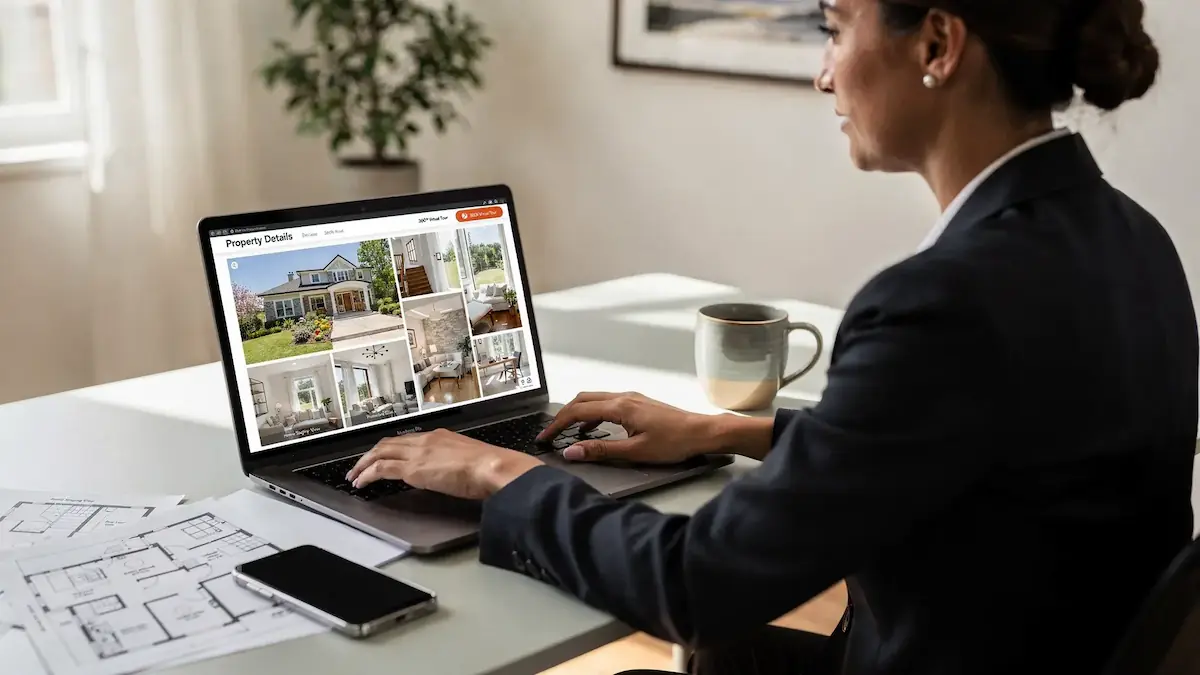
In 10 minutes, you can reorganize and strengthen your existing visuals (cover photo, order, captions), clarify key information (surface area, charges, energy rating, parking, floor, building), and make the listing more immersive with ready-made content (existing 360° tour, virtual staging on photos, short video generated from images).
However, capturing a 360° tour or retaking photos on-site may require more time. The trick is simple: express optimization works very well when you already have a minimum of assets (photos, floor plan, measurements), and you want to transform a "correct" listing into an "obvious must-visit" listing.
The 10-minute timer: actionable checklist
Minutes 0 to 1: Check positioning (target, strengths, constraints) to align the message and obtain fewer ambiguities, more qualified requests.
Minutes 1 to 2: Replace or crop the cover photo to increase click-through rate and get more listing opens.
Minutes 2 to 4: Reorder photos and add 3 captions to tell the property's story, offer smoother reading and fewer unnecessary questions.
Minutes 4 to 5: Upgrade the "technical sheet" (surface areas, charges, energy rating, annexes) to build credibility and create trust.
Minutes 5 to 7: Add immersive content (360° tour) to help remote projection and get fewer "just looking" visits, more "ready to buy" visits.
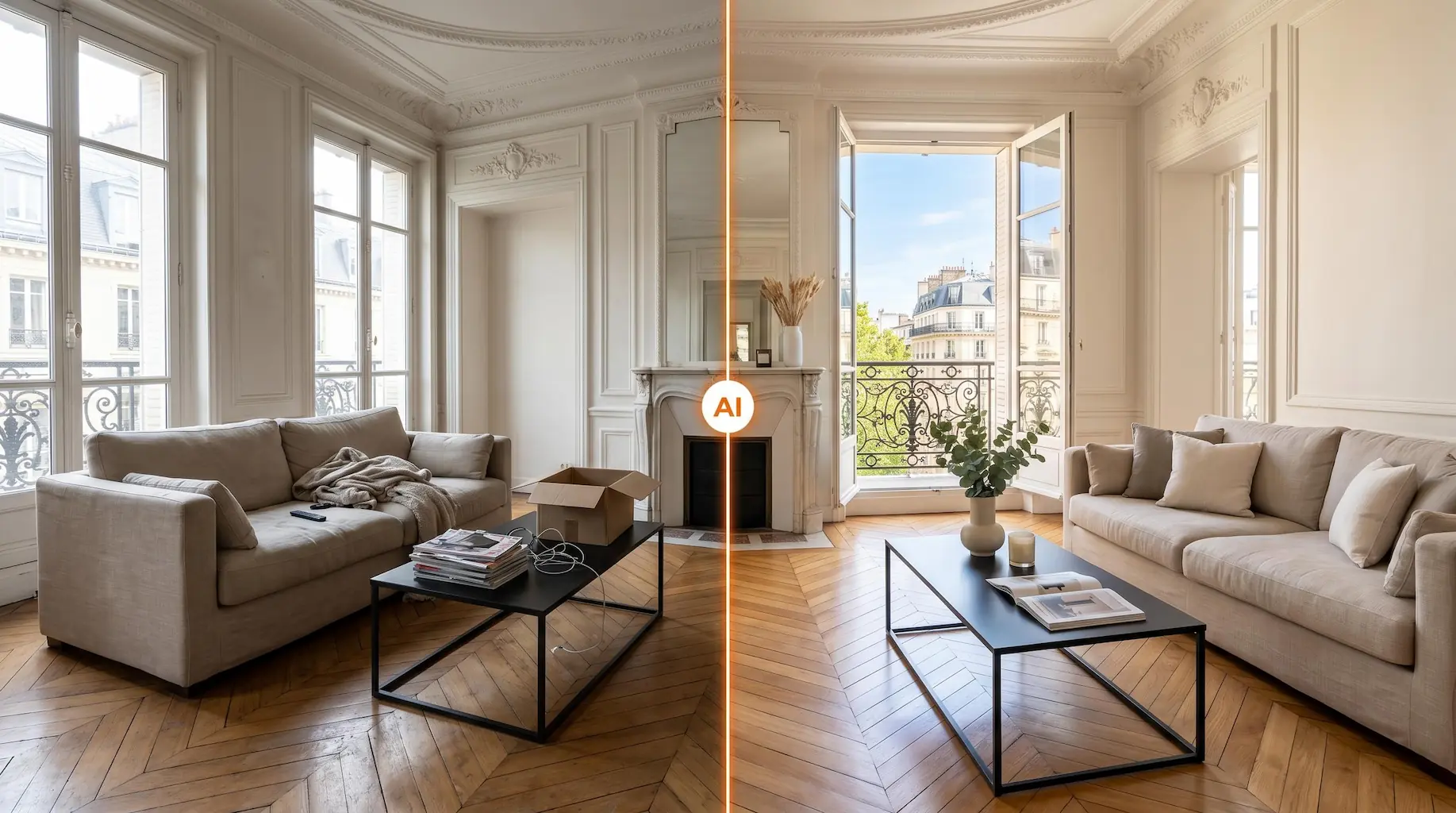
Minutes 7 to 8: Add 1 virtual staging visual if needed to remove the "work needed" or "empty" friction and improve potential perception.
Minutes 8 to 9: Add a short video (social format) to multiply entry points and get more leads from mobile and social.
Minutes 9 to 10: Rewrite the headline with a clear CTA to convert and get more messages and calls.
Minute 0 to 1: clarify the property's promise
Before touching photos or text, ask yourself one question: who is the right buyer or tenant, and what will make them move forward in the listing?
In practice, write down on one line: the target (first-time buyer, investor, family, pied-à-terre, student), the 2 truly differentiating strengths (light, outdoor space, layout, micro-location, quiet, parking, energy rating, finishes), and the sensitive point to address (work needed, overlooked, 5th floor without elevator, building, noise, no storage).
This mini-clarification avoids the most costly mistake: a listing that "sells everything to everyone", therefore convinces no one.
Minute 1 to 2: the cover photo must be obvious
On most portals, the main photo is your poster. If it's average, everything else is invisible.
Choose a cover that shows usage, not a detail: bright living room (often the best choice), terrace or garden if that's the real differentiator, remarkable view, architectural rarity, high-end kitchen, if that's what justifies the price.
Two quick micro-rules: crop to remove parasitic elements (trash bin, cable, radiator in foreground), and avoid extreme perspectives if they distort the room (this creates distrust).
If you have an empty or cluttered property, this is often when virtual staging becomes the fastest lever to make the cover "desirable" without work.
Minute 2 to 4: reorder photos to tell a visit
Many listings lose prospects not from lack of photos, but from lack of logic.
Recommended order (simple, effective): entrance, living area, kitchen, outdoor, bedrooms, bathroom, storage, annexes, building/neighborhood.
Add 3 short captions (not a novel) to guide: "South-facing living room, terrace access", "Separate kitchen, possibility to open to living room (subject to approval)", "Bedroom 2: office or children's room".
You thus reduce back-and-forth "question/answer" exchanges and maintain attention.
Minute 4 to 5: the technical sheet must eliminate unqualified visitors
A high-performing listing attracts, but above all filters. To limit unnecessary visits, verify that these elements are present and consistent:
Livable surface area (if condominium sale) and floor area if useful, number of rooms, configuration (separate, open, sequential), floor, elevator, exposure, building charges, property tax if you communicate it, heating (type, individual/collective), hot water, parking (private, box, space, street) and annexes (cellar, attic, bike storage), energy rating and associated information (mandatory according to regulatory framework).
You don't need to say too much. You mainly need to avoid "gray zones" that trigger curiosity visits.
Minute 5 to 7: add a 360° virtual tour
When a prospect can explore a property, they visualize better and decide faster if the property fits. In markets where visit schedules are saturated, immersion also serves to pre-qualify: people who make appointments have better understood the layout, volumes, and constraints.
Concretely, for express optimization: if you already have a 360° tour, put it above the fold (visible without scrolling if possible) and add a call-out phrase. If you don't have it yet, plan it, but don't block the upgrade of the rest of the listing.
With a solution like Inoveo3D, the idea is to centralize the creation of immersive content (360° tour) and make them easy to integrate into your materials, including in a white-label framework if you work in a network.
Minute 7 to 8: virtual staging, but only where it's useful
Virtual staging is not an "Instagram filter" for everything. It's a projection tool.
Cases where it really helps: empty property (buyer can't estimate scale), atypical room (hard to understand usage: office, spare bedroom), dated decor (style masks potential).
Good reflex: add only one or two staged views, on key rooms (living room and/or master bedroom). And stay consistent with reality: volumes, openings, circulation.
Inoveo3D offers AI-assisted staging to quickly produce more sellable visuals, which is particularly suited to a "short time" constraint when the property is empty or needs enhancement.
Minute 8 to 9: a short video to capture mobile
A listing no longer lives only on a portal. Part of the leads also come from WhatsApp, Instagram, Facebook, or a simple share.
The most time-efficient format is often: 15 to 30 seconds, vertical, 6 to 10 shots, with 3 on-screen texts: the main benefit (e.g., "Top floor, terrace, unobstructed view"), approximate location (e.g., "6-minute walk to metro X"), price and CTA (e.g., "Visit by appointment").
If you already have good photos, video generation from visuals can save you a lot of time. Inoveo3D indicates offering video formats ready for networks, which fits well with this step.
Minute 9 to 10: rewrite the headline and clear CTA
You don't need to rewrite the entire description. Rewrite only: the first sentence, a projection sentence, a reassurance sentence, a call to action.
Simple model (to adapt):
Headline: "Bright 3-room apartment with outdoor space, steps from [landmark]"
Projection: "The living area opens onto [terrace/balcony], ideal for [concrete use]."
Reassurance: "Floor plan and 360° tour available to allow you to validate volumes before traveling."
CTA: "Contact us to receive the complete file (plan, charges, energy rating) and reserve a visit slot."
This structure decreases vague requests and increases serious requests.
Mistakes that lose leads
Too many superlatives, not enough proof: "Magnificent", "exceptional", "love at first sight" without concrete elements tires the reader. Replace with facts: exposure, outdoor, floor, layout, renovation date, window type.
Inconsistent visuals (random order, duplicates, missing rooms): this is one of the most frequent causes of abandonment. A reorganization and 3 captions often fix the problem without effort.
Forgetting to own constraints: a 5th floor without elevator can sell, but not if you hide it. Own it, and compensate with usage: brightness, view, quiet, low charges.
Measuring your 10 minutes' impact
After publication, monitor over 48 to 72 hours: the listing views / contacts ratio, the proportion of "qualified" requests (questions about financing, timing, file) vs "available?", the no-show rate at visits.
If you have more contacts but less qualified, it's often a message problem (headline too broad). If you have fewer contacts but very qualified, you've probably improved filtering, which is often positive.
Towards a truly immersive listing
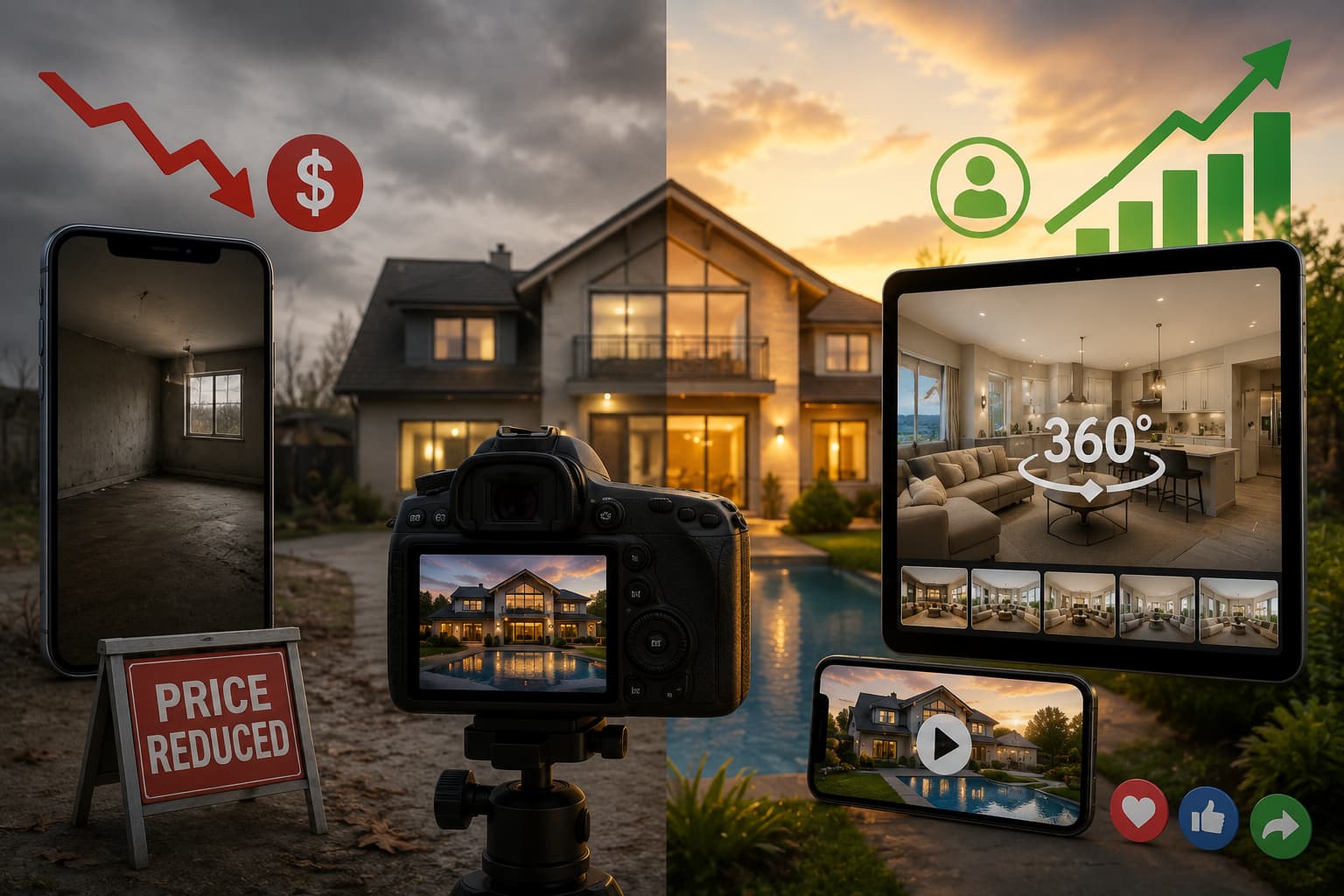
The 10-minute optimization is an excellent hygiene reflex for your properties. But if you want to systematize more engaging listings (and limit unnecessary visits), the best approach is to standardize your assets: 360° when the configuration allows it, virtual staging when the property is empty or dated, short video reusable on all channels.
This is precisely the type of production that tools like those from Inoveo3D seek to make faster, with automated content creation (virtual tour, AI staging, video), multi-device access, and options like API integration or white-label according to your organization.